Why Most Podcasts Die After 10 Episodes (And How to Avoid the Same Fate)

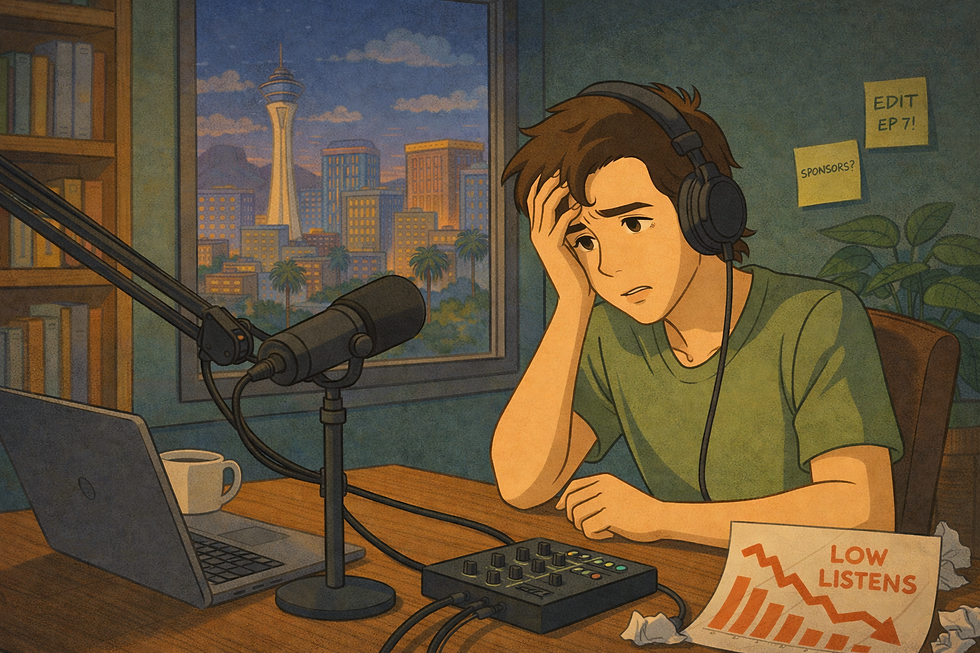
Podcasting has exploded in popularity over the past decade. Millions of shows exist across platforms, and creators everywhere—from Las Vegas entrepreneurs to global influencers and creators—are jumping behind the microphone. But despite the hype around podcasting, the reality is harsh: most podcasts fail.
Many shows never make it past the first few months. In fact, industry observations show that a large percentage of podcasts stop publishing after only a handful of episodes. The good news? The reasons are predictable—and avoidable.
Here are the five biggest reasons podcasts fail, and how to ensure yours succeeds.
1. Lack of Consistency
One of the fastest ways for a podcast to lose momentum is inconsistency. Many creators start strong but quickly struggle to maintain a regular publishing schedule.
Listeners build habits. If your show disappears for weeks at a time, audiences move on.
Common mistakes include:
Skipping recording sessions
Publishing randomly
Losing motivation after a few episodes
“Consistency beats perfection. A weekly episode always wins over an occasional masterpiece.”
A professional podcast studio like BlockHash Studios can help eliminate friction by providing a dedicated recording environment and streamlined production workflow.
2. Poor Audio and Production Quality
Nothing drives listeners away faster than bad audio.
Even the most interesting conversation becomes difficult to follow when microphones sound distant, echoing, or distorted. Many new podcasters underestimate how much sound quality influences listener retention.
Common production issues:
Cheap microphones
No sound treatment
Background noise
Lack of editing
“People forgive imperfect content, but they won’t tolerate painful audio.”
Recording in a professional podcast studio dramatically improves credibility and listener experience.
3. No Clear Target Audience
A podcast that tries to speak to everyone ends up resonating with no one.
Successful podcasts are niche-focused and designed for a specific audience. For example, Las Vegas creators may focus on entrepreneurship, local business, or entertainment culture.
Without a clear audience, episodes become scattered and unfocused.
Questions every podcaster should ask:
Who is this show for?
What problem does it solve?
Why should someone listen every week?
“Clarity attracts listeners. Confusion repels them.”
4. Lack of Promotion and Distribution
Many creators believe simply publishing a podcast will automatically attract listeners. Unfortunately, that rarely happens.
Podcast discovery requires active promotion and multi-platform content.
Successful podcasts repurpose episodes into:
Social media clips
Short-form video content
YouTube highlights
Email newsletters
This is where influencers and creators have an advantage—those who understand content ecosystems can multiply the reach of each episode.
“One podcast episode should become 10 pieces of content.”
5. Unrealistic Expectations
One of the biggest reasons podcasts fail is burnout from unrealistic expectations.
Many creators expect rapid growth, sponsorship deals, or viral success within the first few episodes. When that doesn’t happen, they quit.
The truth is that podcasting is a long-term authority-building strategy.
What successful podcasters understand:
Growth is gradual
Trust builds over time
Content compounds in value
“The first 50 episodes are practice. The next 50 build momentum.”
Studios like BlockHash Studios in Las Vegas are helping professionals treat podcasting more like a media asset than a hobby—approaching it strategically instead of casually.
--- --- ---
Contact us today to set up a meeting! 📩


Comments